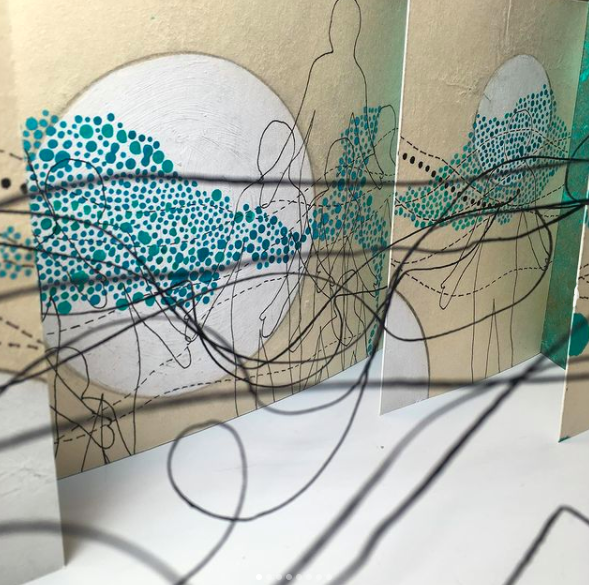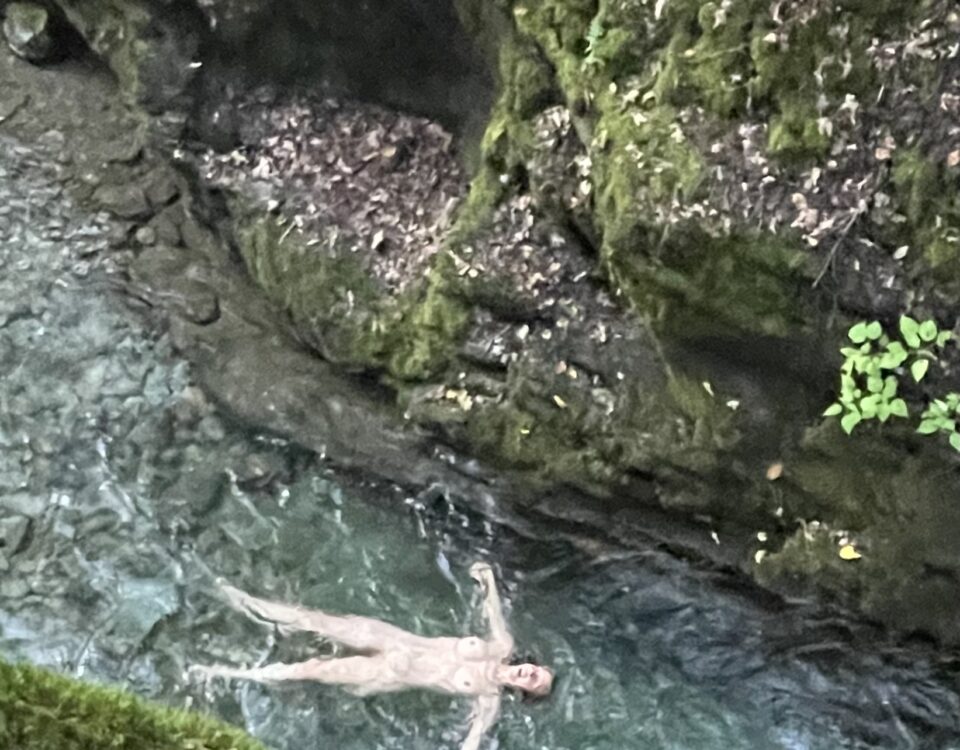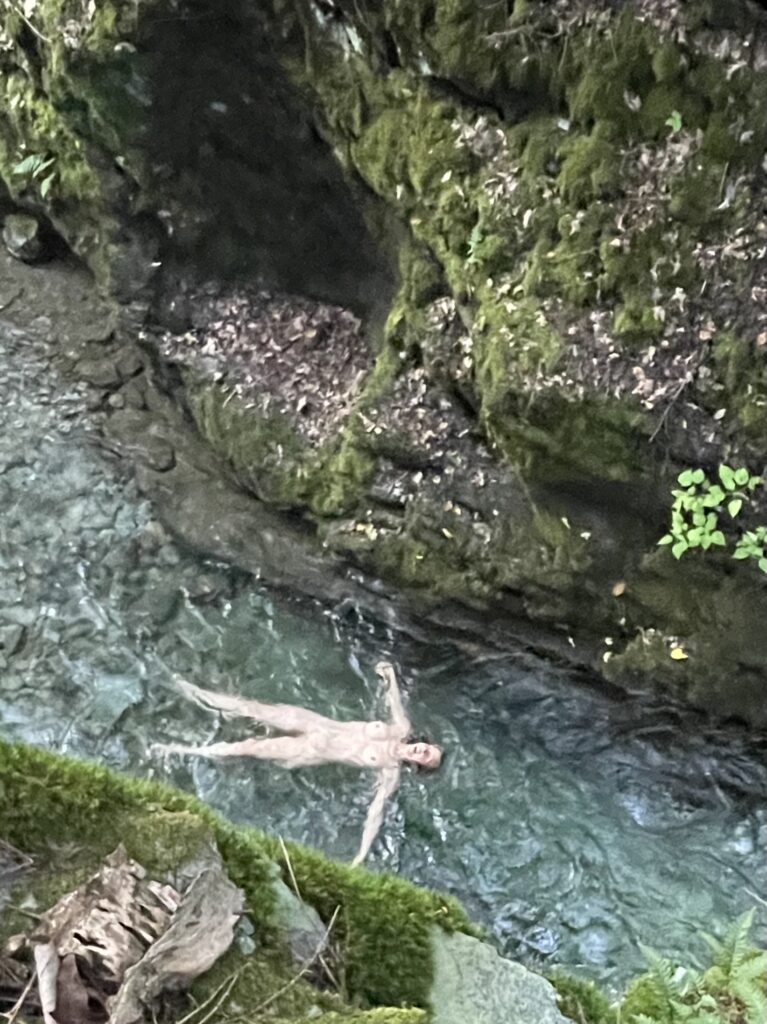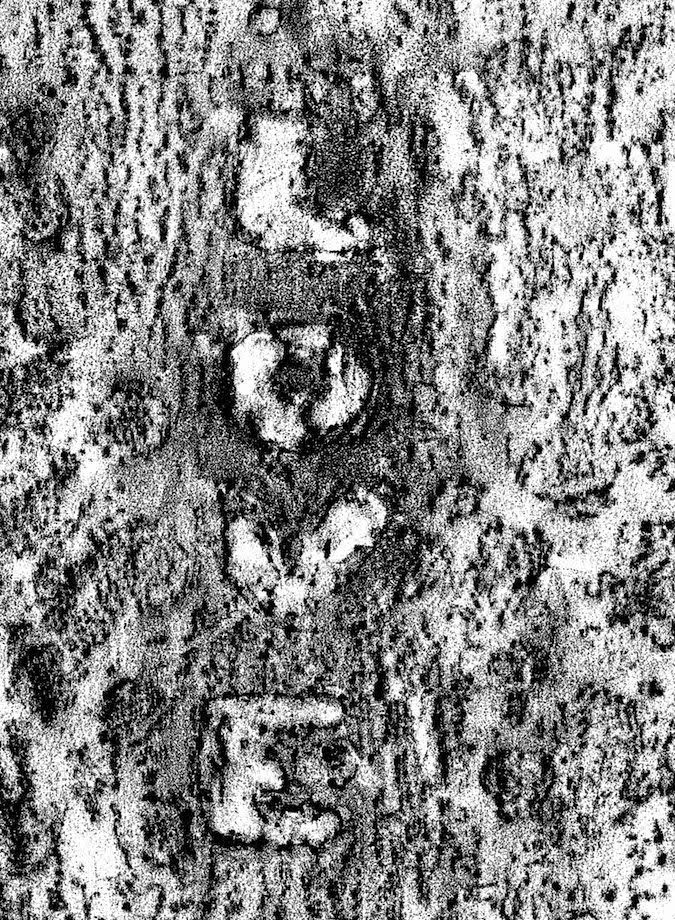
Can what is taken be returned? Opening July 11, 2025 at the Solomon Wright Public Library in Pownal, VT
June 19, 2025
Everything doesn’t need to be big
December 11, 2025nThis past summer I was delighted, shocked, honored, and amazed to discover that I was awarded the The Guild of Bookworkers Mid-Career Award. This new award is generously funded through a grant from the Maxwell/Hanrahan Foundation. The award will be given to two Guild of Book Workers members each year for at least the next three years. The award funding will allow the recipient to set aside time for study, reflection, opportunities, new projects, experimentation, and exploration, as well as attend the Guild’s annual Standards of Excellence Seminar. I was one of those two members. The Berkshire Eagle, MCLA, and iBerkshire each wrote a story about me and the award.
This is the statement I used in my application:
I want to die lightly—but more importantly, I want to live lightly.
In a world where convenience and consumption rule, living lightly can be difficult. Single-use plastics, easy orders from Amazon, and the constant push to acquire more are embedded in our daily lives. As an artist and educator, I actively resist that tide. My material choices, studio practices, and community-centered projects reflect a deep commitment to consuming as little as possible, and to leaving the earth better than I found it.
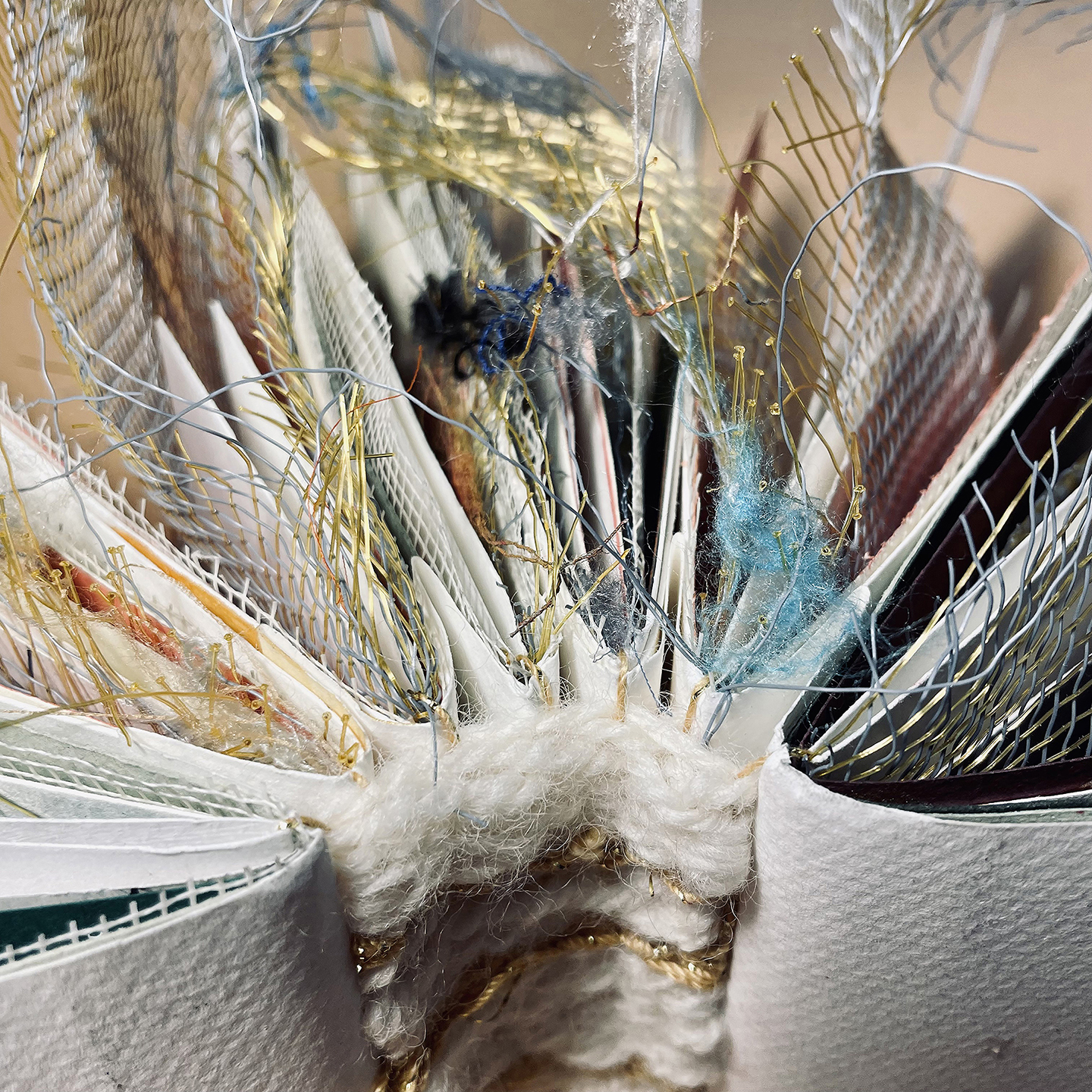
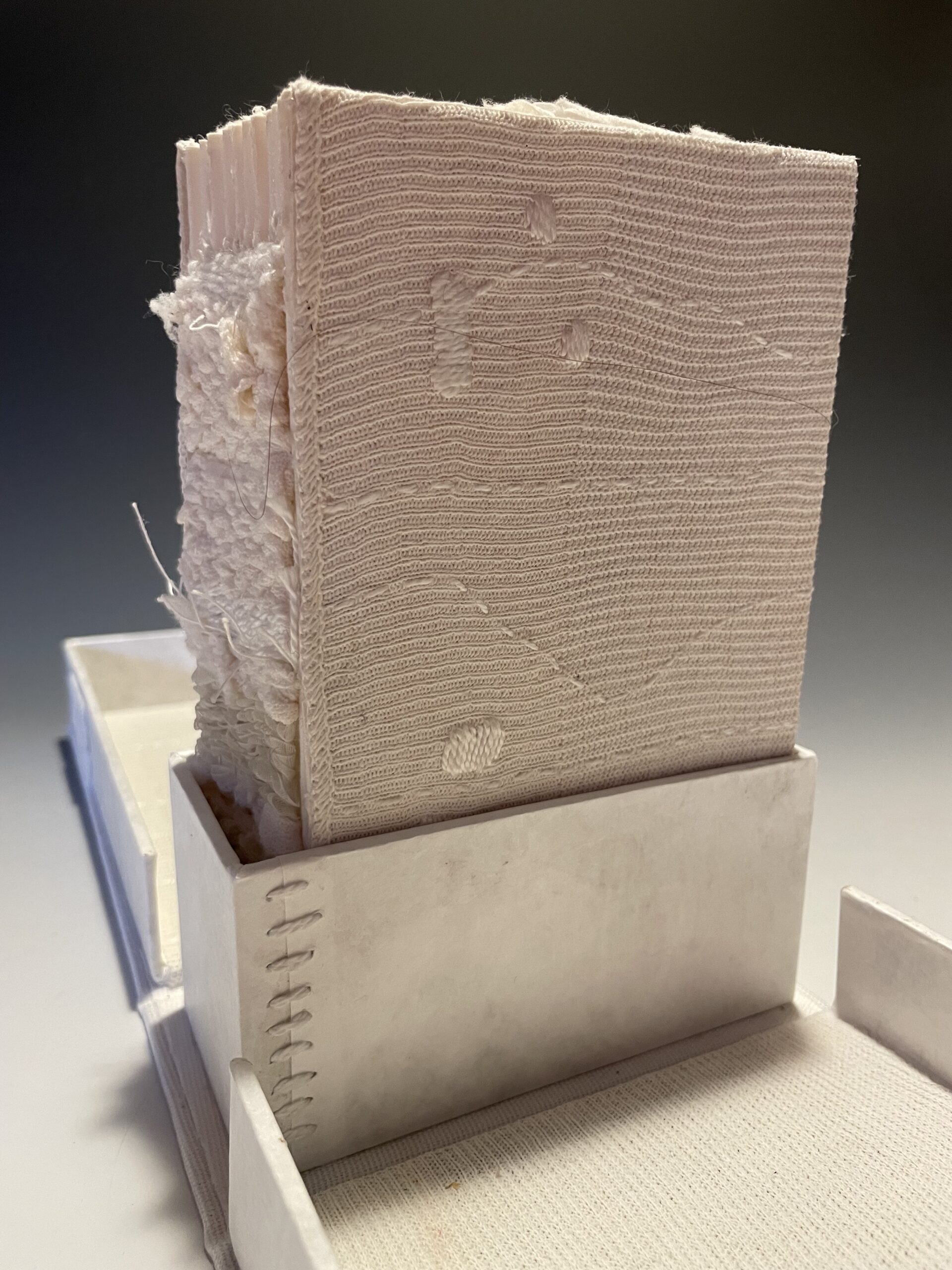
While my practice spans several interconnected areas—teaching, LetterPRESS as a Public Art Project, collage, wilderness mindset, and more —the work I’m presenting here highlights my use of repurposed materials. I create with what I have on hand or can find, rather than purchasing anything new. I do make use of the “new” supplies I’ve gathered over the years, but beyond adhesives, I rarely buy additional materials. Trash, scraps, offcuts, and the overlooked become the starting points for my artistic inquiry.
My approach was shaped in graduate school at The University of the Arts in Philadelphia, where I studied under Hedi Kyle. I served as her teaching assistant during my second year and was introduced to the idea of Plunder Books—a joyful and generative process that involved making books from found materials selected through a silent exchange. This playful constraint radically expanded my understanding of what a book can be. It honed my structural skills, deepened my relationship to the form, and reinforced the beauty and meaning embedded in forgotten things.
Since then, I have taught this process to hundreds of people—in the classroom where I teach full-time, and in workshops across multiple states and even internationally. I continue to use it in my own practice to comment on the current cultural and political moment, and to reflect on my own place within it. The work I’m submitting includes materials such as paper made from my own 50-year-old baby diapers, fused plastic bags, discarded cords, acupuncture tubes, old clothes, and all sorts of studio scraps.
And you know what, I nearly did not apply. I was encouraged to apply be a friend and fellow artist. I pulled together an application, submitted it, and added the application to my list of opportunities, confident I would be able to add it to my 20 Failures of the year. If you aren’t failing, you aren’t trying, a statement often attributed to Denzil Washington pushes me to try and try again. As a young artist, one of my mentors stated that if I was lucky, for every 10 things I applied to, I would be lucky if I got one. So a few years ago I began a practice to get 20 rejections every year. A yes meant that I had to apply for yet another thing. So the no’s became moments of joy.
I was (and still mostly am)strategic. I don’t apply willy-nilly, I apply for things for which I’m 100% certain I have the qualifications. Jobs, grants, fellowships, residencies, exhibits. Sometimes my ROI, because let’s face it, completing an application is a total investment, is more than 10%, sometimes it’s less. But over the years it averages out to around 10-20%. Those aren’t great odds. An artist friend of mine never applies for anything, she deems the ROI not worth it. Disappointment is real. If you are a fellow artist reading this, I’m sure you can relate.
But then there are those moments when you do win the award, get the acceptance, see your work exhibited. This recognition from the Guild of Book Workers is just that, a moment of recognition for work that I’ve been building for years, and hope to continue to develop in the days to come. I have so much gratitude for my past, present, and future self, for the members of the selection committee, the teachers and mentors along the way, colleagues and friends. To all of you I thank you!
-

- Code Blue

-
- An Exercise in Vulnerability
-
- Marking Time
-
- Butterfly Effect

-
- Winged

-
- Twisted