Nobody puts the Pope in a corner
April 20, 2026Flow. Deliberate Practice. 100 Days.
This year’s collective 100 Day Project ends next week. Did you participate? If you did, I wonder how it went for you, what you learned, and what you will do next. This post has been percolating for a while — what happened during my 100 Day Project this spring, and what I learned about learning.
My first love of patterns and surface design came from my love of sewing and fabric. I first learned how to carve stamps and print in the fiber studio in art school. I vividly remember the smell of the ink in the textile studio, almost sulfur-y with stale burnt ends thrown in, likely from the heat presses used to set the designs. The scent spilled out of the fiber studio and into the hallway, greeting me as I walked into the drafty modernist building. I’d set up my station and begin my daily love affair with the meditative practice of repetition: ink, stamp, ink, stamp, ink stamp. I kept my eye on the detail. I aimed for exact alignment of each motif within the structure of the design. I learned to celebrate precision.
These days I print with type, larger linoleum blocks, and polymer plates. I’ll carve the occasional rubber stamp, but regular stamp making and pattern practice, I hadn’t really done that since those olfactory days of college.
This year for the 100 Day Project I decided to try something different, a deep dive into pattern making. An online course launched right around the same time. The course provided some initial motivation and structure, plus instruction. My specific interest was learning more about how tessellated patterns work. How do patterns connect to each other and form new or secondary patterns? How do triangles, hexagons, ogees, and custom shapes work in grids, columns, and other structures? What doesn’t work?
Every day I showed up and spent anywhere between 10-90 minutes working on a pattern, design, or carving. Time often dropped away. One more minute would turn into 10, 20, or sometimes 40 more minutes.
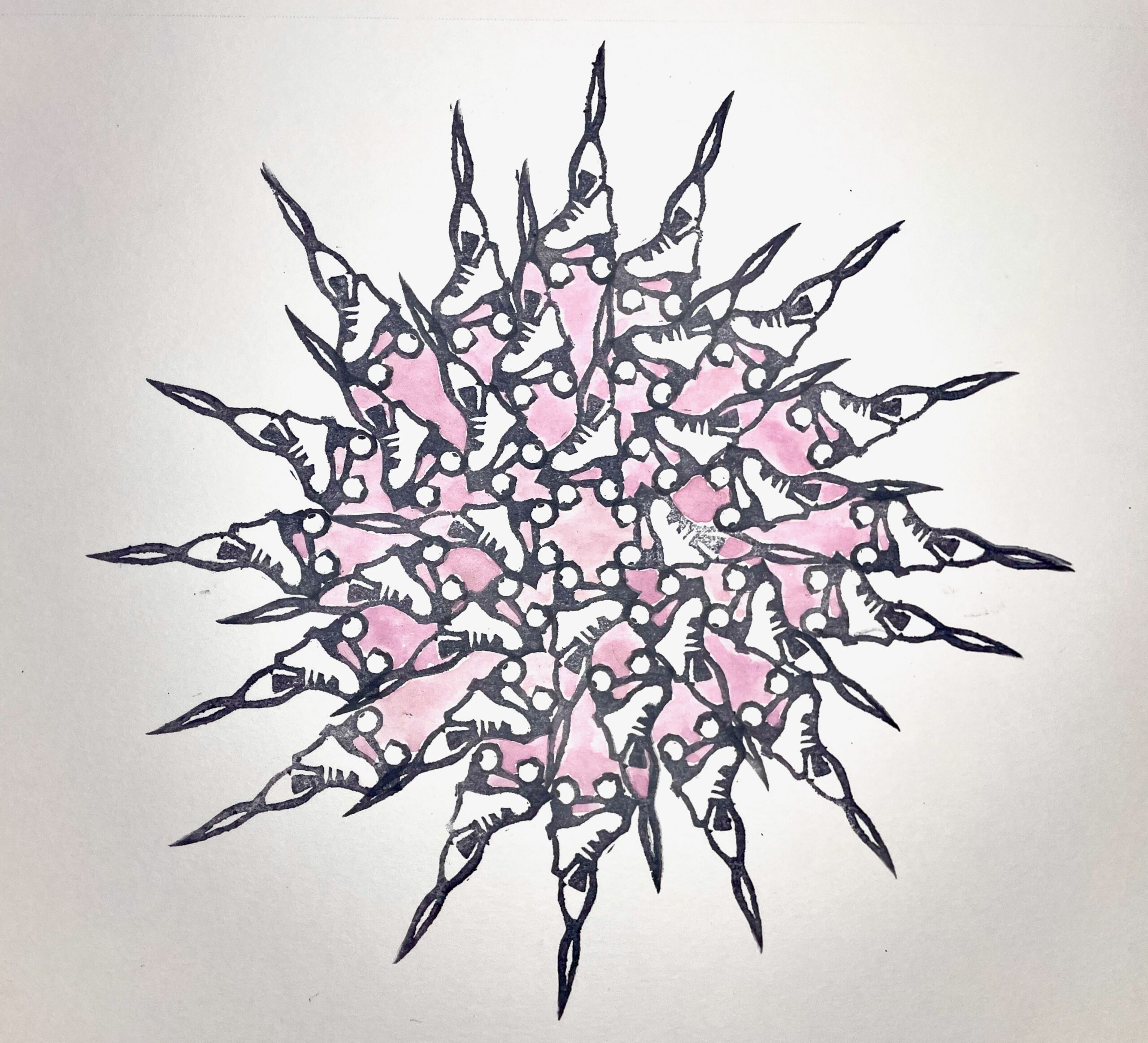
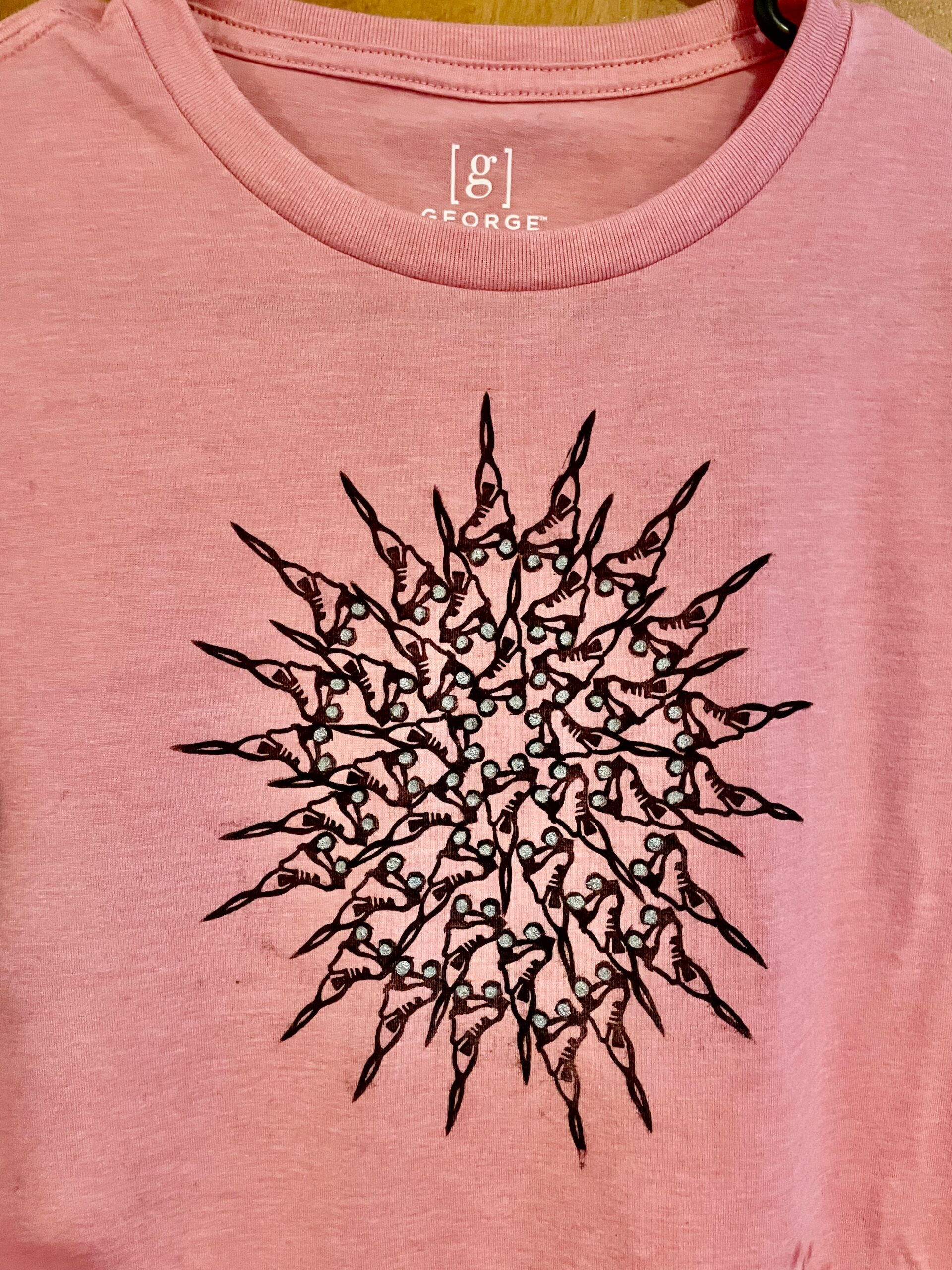
I made a mandala of roller skates.
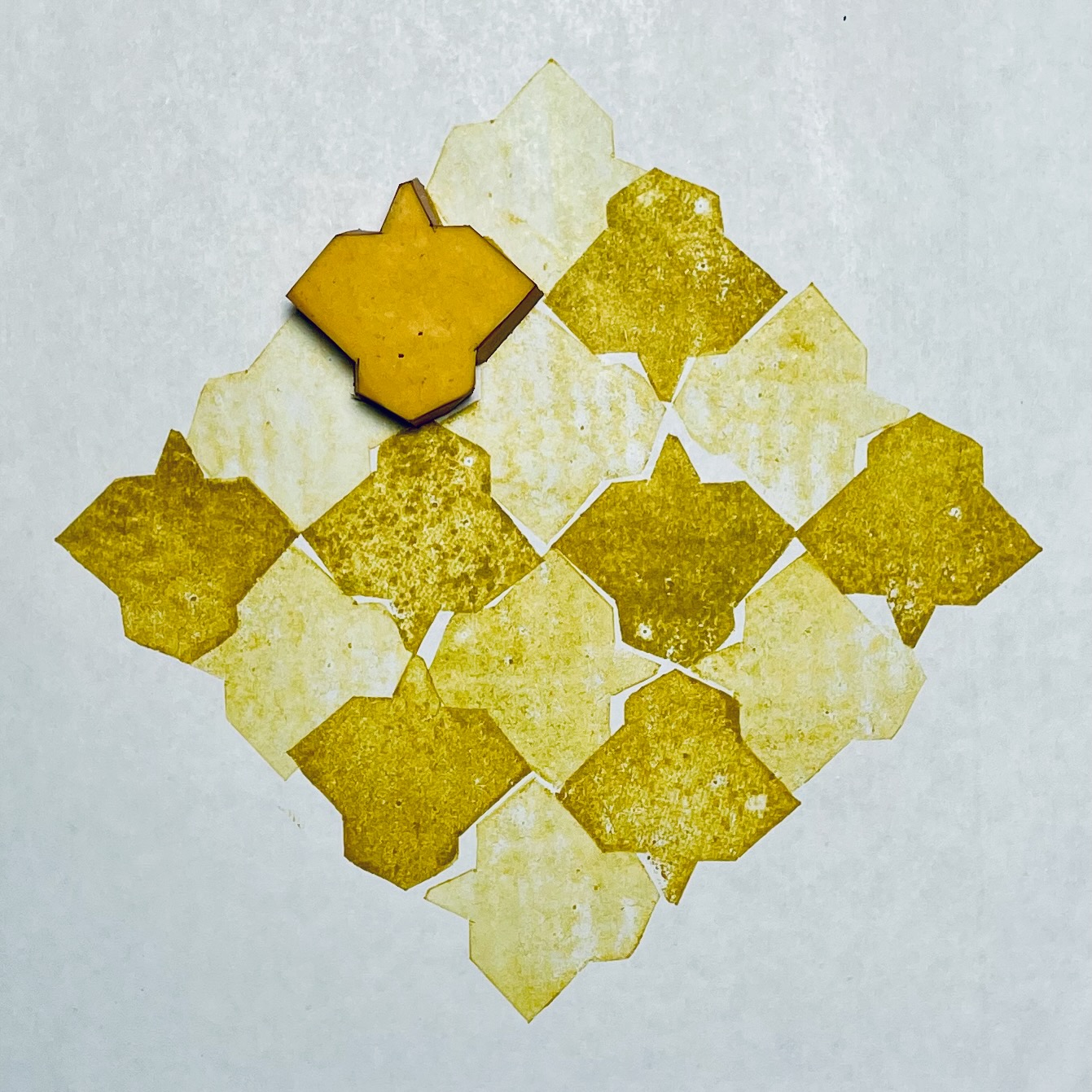
I explored tessellated Nasrid pattern making inspired by what I saw in Spain.
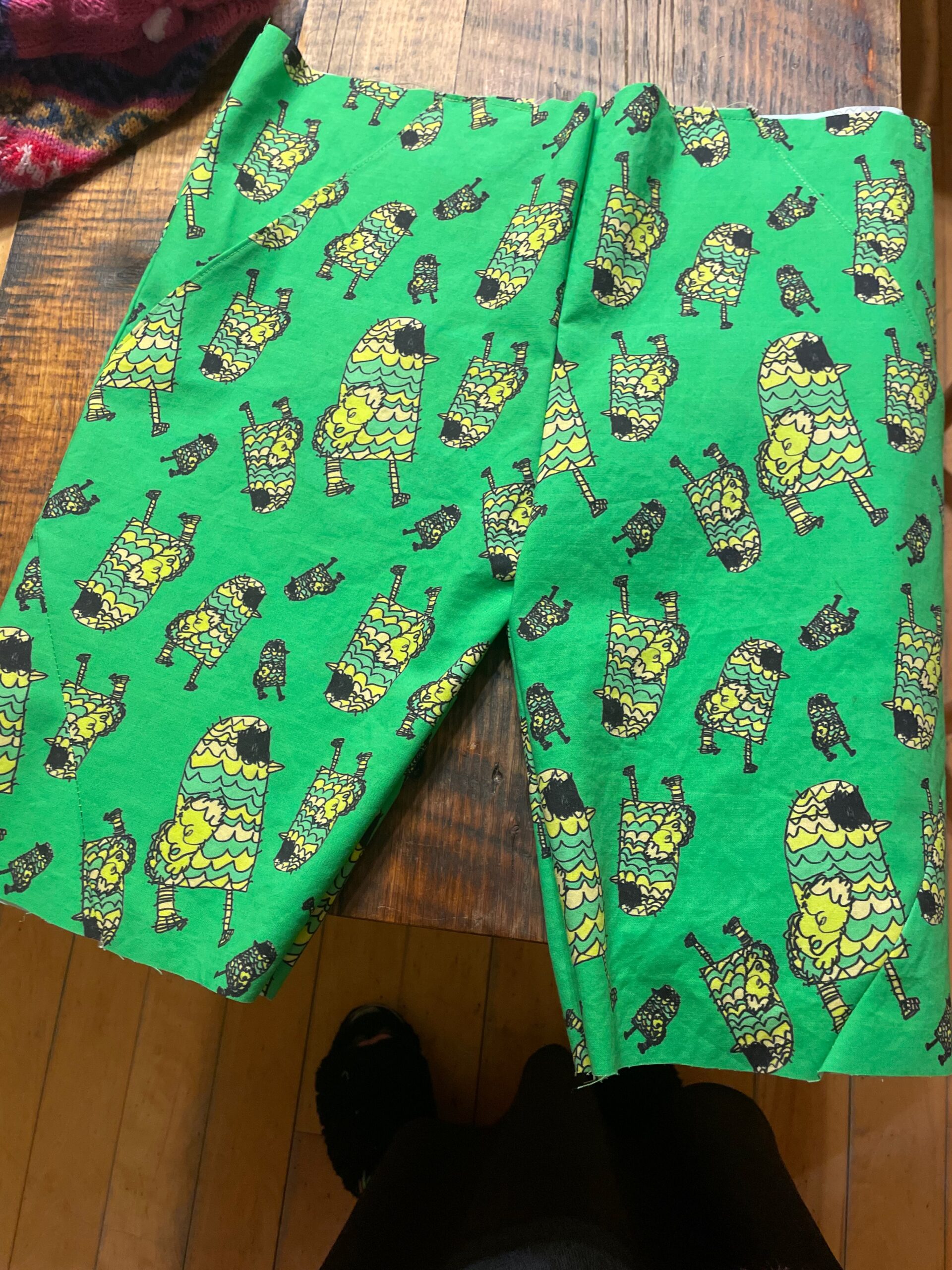
I transformed my grandson’s hand drawn character Chicken Dude into fabric and made him a pair of shorts, which may be the best thing I’ve ever printed! (These are the shorts in-progress, I swear I finished them.)
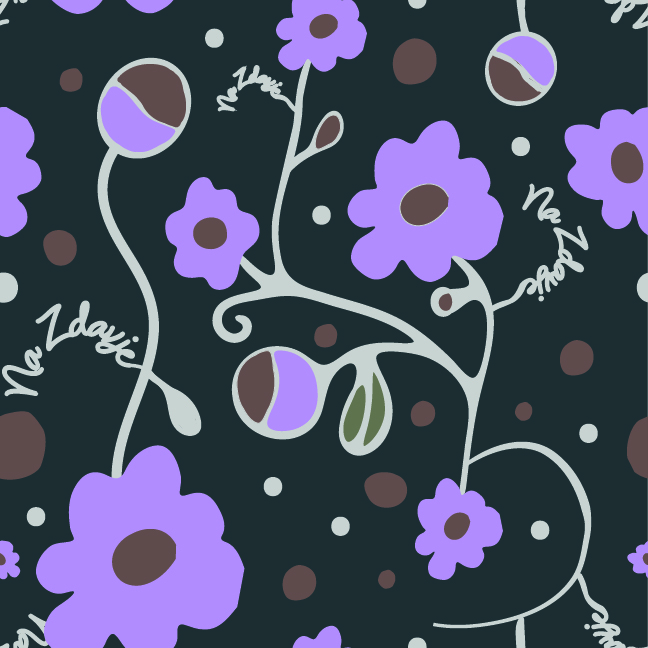
I played around with other digital pattern making crafting designs that will become dishcloths for my family.
The thing that was different with this project compared to past projects was the small edge of newness. From small technical tips related to how to carve, to tools like clear acrylic blocks on which to mount my carved stamp for ease with printing, I got to be the beginner and learn through someone else’s expertise. Some of this knowing was through “skills and drills”. I would look at the formulation of a triangle or hexagon pattern and try to replicate the structure. These micro-challenges asked my brain to work beyond the comfortable, but not into impossible. As a result, I found myself dropping into flow easily.
I remember learning about flow and Mihaly Csikszentmihalyi when I was in college. Who was this guy and how the heck did you pronounce his last name? What I didn’t realize then was how revelatory his naming of flow was, or maybe I did, because it’s one of the few very clear memories of knowledge acquisition from those days. I had experienced flow state where I was one with the moment, a state of consciousness where I was so involved with my “work” that nothing else seemed to matter. Time would slip away as I concentrated deeply on whatever it was. I loved getting to this place.
I always knew what flow was, but what about deliberate practice? I first read about deliberate practice in 2016 in Angela Duckworth’s book GRIT. I learned this:
-
Regular practice can be mindless, rote, pursued for enjoyment with little if any external feedback with the practitioner plateauing over time.
-
Deliberate practice requires deep concentration with the goal of furthering a skill. It often has an external form of feedback, resulting in measurable improvement.
This 100 Day Project found me back in that world of flow and deliberate practice. My attention held throughout the project, it was just hard enough. That’s the thing about skill development, it must be the right kind of challenge. Too hard and you may abandon. Too easy may also lead to abandon. As you think about your own version — official 100 Day Project or not — the questions worth sitting with are the same ones I asked myself:
-
Does it have the “right” kind of challenge, to move you through the 100 Days?
-
Are there enough drills?
-
Are there enough off ramps into side projects to keep you going?
-
What is the role of grit and discipline within this as well?
-
Will you know when to shift, to take a break, but still stay engaged?
-
How will you commit to the finish?
Ultimately, my biggest takeaway from this 100 Day Project versus past projects is that I like to learn. Learning and discovery motivate me. Even more so when I can also celebrate attempts at precision. Stamp printing is, at its heart, imprecise work. I loved the challenge of trying to be precise, and the directions imprecision led me. And I got myself a whiff of that burnt end smell, too, as I ironed my roller skate mandala printed on my skate shirt.
Want to learn more about Flow and Deliberate Practice? Here are some of my favorite books about flow and deliberate practice:
-
Outliers by Malcolm Gladwell
-
The Power of Habit by Charles Duhigg
-
Practice Perfect by Doug Lemov
-
Atomic Habits by James Clear
-
Mindset by Carol Dweck
-
Stolen Focus by Johann Hari
-
Peak by K. Anders Ericsson
-
Flow by Mihaly Csikszentmihalyi